How the sky
was won
Before he was the god who gathers the clouds, Zeus was a child hidden in a cave. The short version of a long myth, told the way the ancient poets told it — and the reason every painting in the cycle looks up.
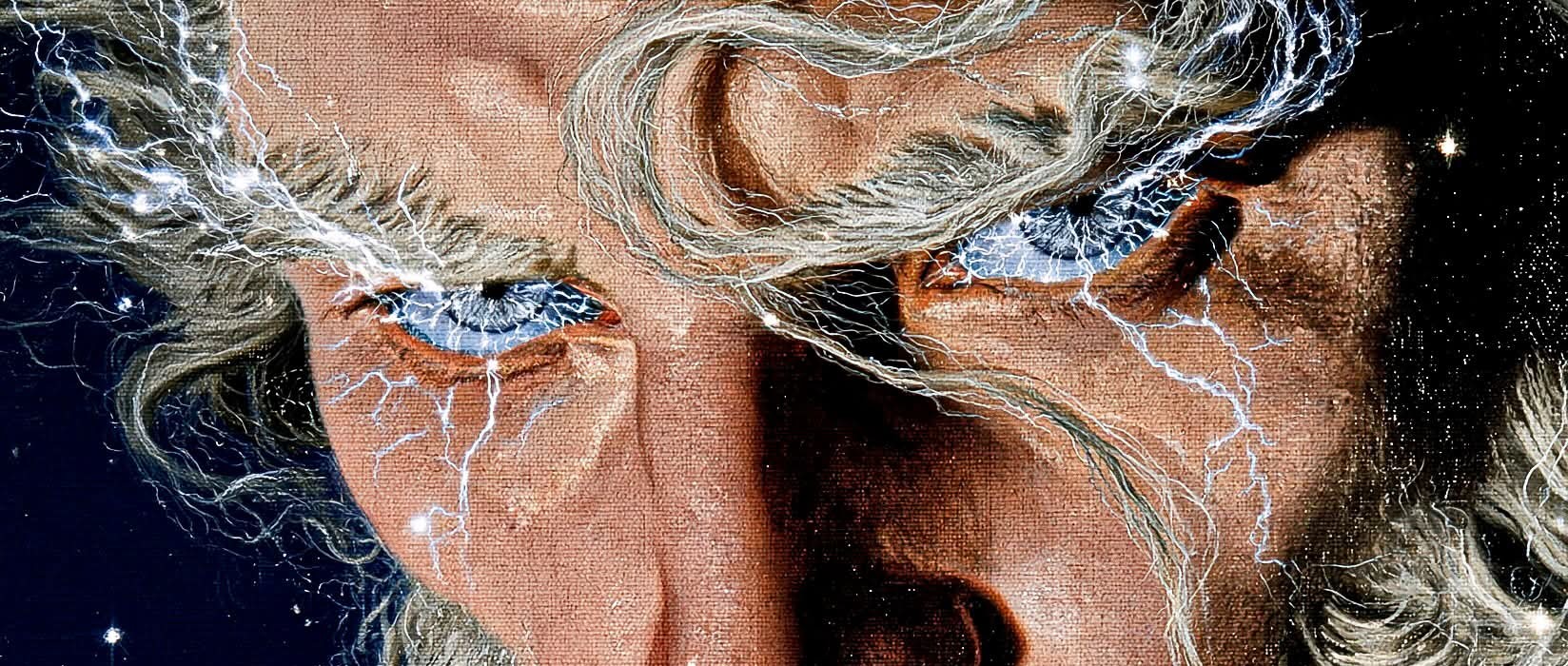
Swallowed
Kronos, lord of the Titans, had been warned that a child of his would overthrow him, as he had overthrown his own father, Ouranos. So each time his wife Rhea gave birth, he swallowed the child whole.
Hestia, Demeter, Hera, Hades and Poseidon all went down. When the sixth child was born, Rhea handed her husband a stone wrapped in swaddling clothes, and he swallowed that instead. The real child was carried to Crete and hidden in a cave on Mount Dikte — some say Mount Ida — where nymphs fed him on the milk of the goat Amaltheia and on honey.
Outside the cave the Kouretes danced in armour and beat their spears against their shields, so that Kronos would never hear the baby cry. The first sound around Zeus was bronze on bronze.
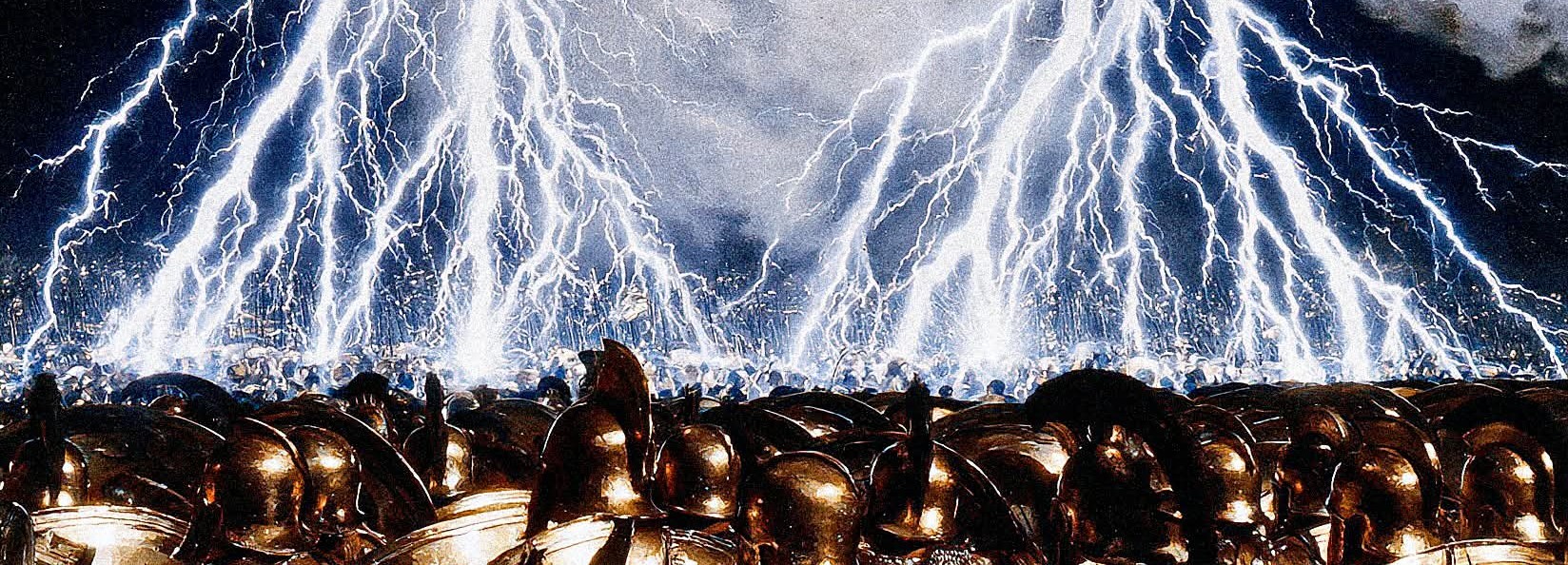
The war in heaven
Grown, Zeus made his father vomit up the stone and then his brothers and sisters, and led them against the Titans. The war — the Titanomachy — lasted ten years, the Olympians on Mount Olympos, the Titans on Mount Othrys, and neither side could win.
The balance broke when Zeus freed the prisoners Kronos had chained under the earth: the Hundred-Handers, and the three Cyclopes, Brontes, Steropes and Arges — Thunder, Lightning and Brightness. In gratitude the Cyclopes forged for him the thunder and the thunderbolt. From that day the weapon and the god were one.
From Heaven and from Olympus he came forthwith, hurling his lightning: the bolts flew thick and fast from his strong hand together with thunder and lightning, whirling an awesome flame.
Three lots
With the Titans shut in Tartaros, the three brothers divided the world by drawing lots. Plate IV paints the result from top to bottom.
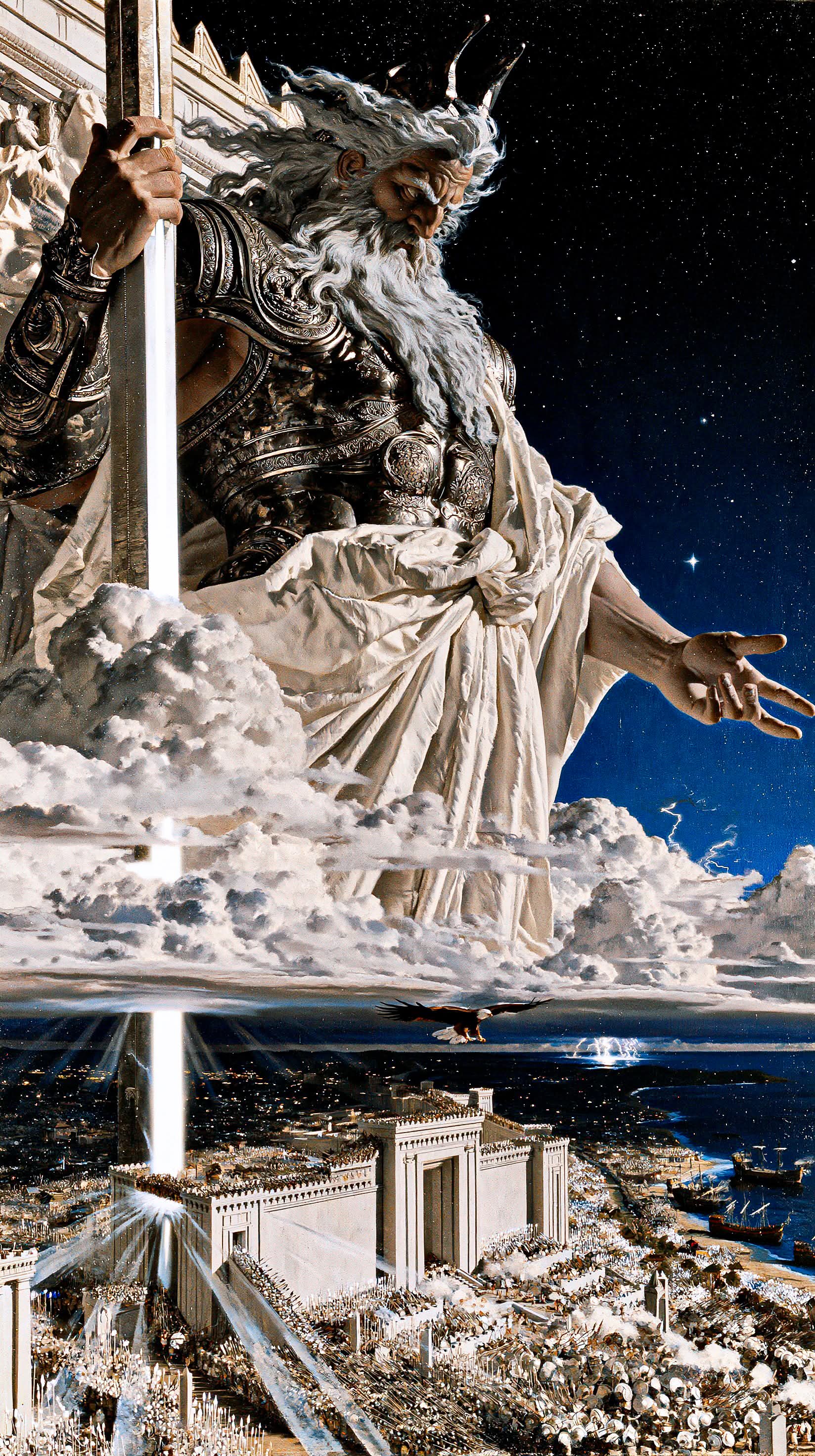
- 1The sky — Zeus drew the wide heaven among the clouds. Above the deck he sits crowned, the only figure in his floor of the world.
- 2The cloud deck — high Olympos and the earth were left common to all three brothers. In the painting it is a floor, flat as marble.
- 3The sea and below — Poseidon drew the grey sea, with its ships; Hades the misty dark beneath the earth. Only the sky's light reaches both.
The eagle and the guest
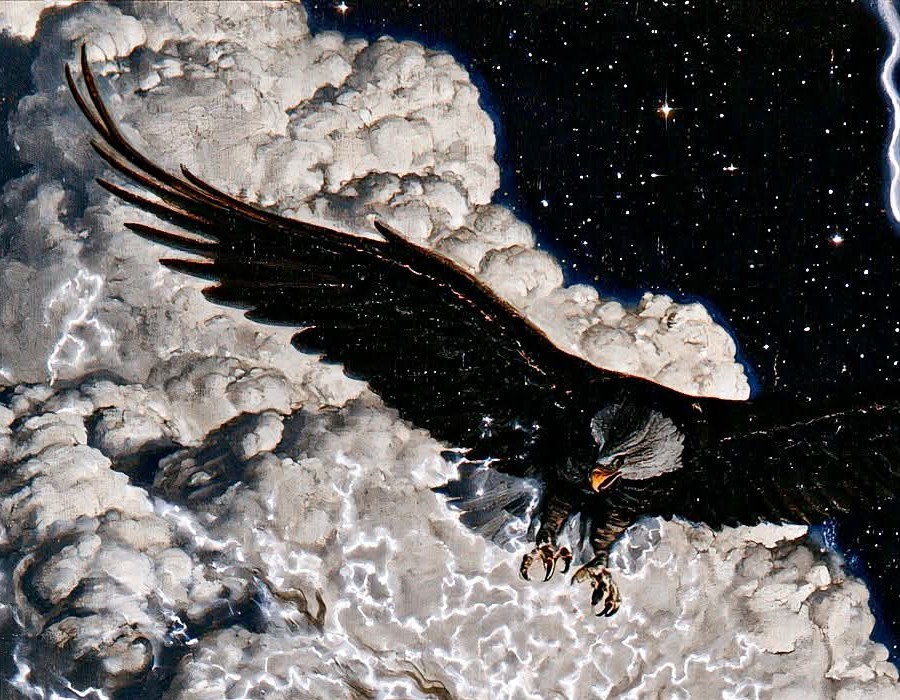
The eagle was his bird: it carried his thunderbolts, it flew higher than any other creature, and an eagle sent from the right was his sign. In the paintings it appears three times — over his head, over the sea, over the army.
But the god of the sky was also the god of the doorway. As Zeus Xenios he protected strangers and guests; anyone who turned away a traveller, or harmed one under his roof, offended Zeus himself. As Zeus Horkios he heard every oath and punished the oath-breaker. As Zeus Hikesios he sheltered the suppliant at the altar.
The thunderbolt was the threat. Hospitality, the sworn word and the protection of the weak were what it guarded.
The overseer
Zeus was Epopsios, the overseer. Justice — Dike — was his daughter; she sat beside him and told him of every crooked judgement made below. The poets imagined him watching the cities of men from Olympos or from the peak of Ida, weighing the fates of armies on golden scales.
That is why the paintings are built the way they are: the god at the top of a tall canvas, the people tiny at the foot, and you standing with the mortals, looking up.
The many names
A god worshipped in every city was called by the name of every need. Forty-eight of his cult titles, from Olympia to Crete — sky, rain, oath, guest, war, house.
Olympios of Olympos Keraunios of the thunderbolt Kataibates who descends in lightning Astrapaios of the lightning flash Brontaios of thunder Nephelegeretes cloud-gatherer Hypsibremetes thundering on high Erigdoupos loud-crashing Terpikeraunos who delights in thunder Argikeraunos of the bright bolt Aigiochos bearer of the aegis Kronides son of Kronos Hypatos most high Basileus king Pater father of gods and men Xenios of strangers and guests Hikesios of suppliants Horkios of oaths Agoraios of the market place Polieus of the city Herkeios of the courtyard Ktesios of the storeroom Soter saviour Eleutherios of freedom Meilichios the gracious Ombrios of rain Hyetios rain-bringer Ikmaios of moisture Ourios of the fair wind Epopsios the overseer Panomphaios source of all omens Teleios the fulfiller Genethlios of birth Philios of friendship Phratrios of the brotherhood Patroos of the fathers Areios of war Stratios of armies Tropaios of the rout Panhellenios of all Greeks Lykaios of Mount Lykaion Dodonaios of Dodona Idaios of Mount Ida Diktaios of Mount Dikte Kretagenes born in Crete Akraios of the heights Hymettios of Hymettos Atabyrios of Atabyron
The five plates hang together in Hall I.
See the Thunder Cycle